
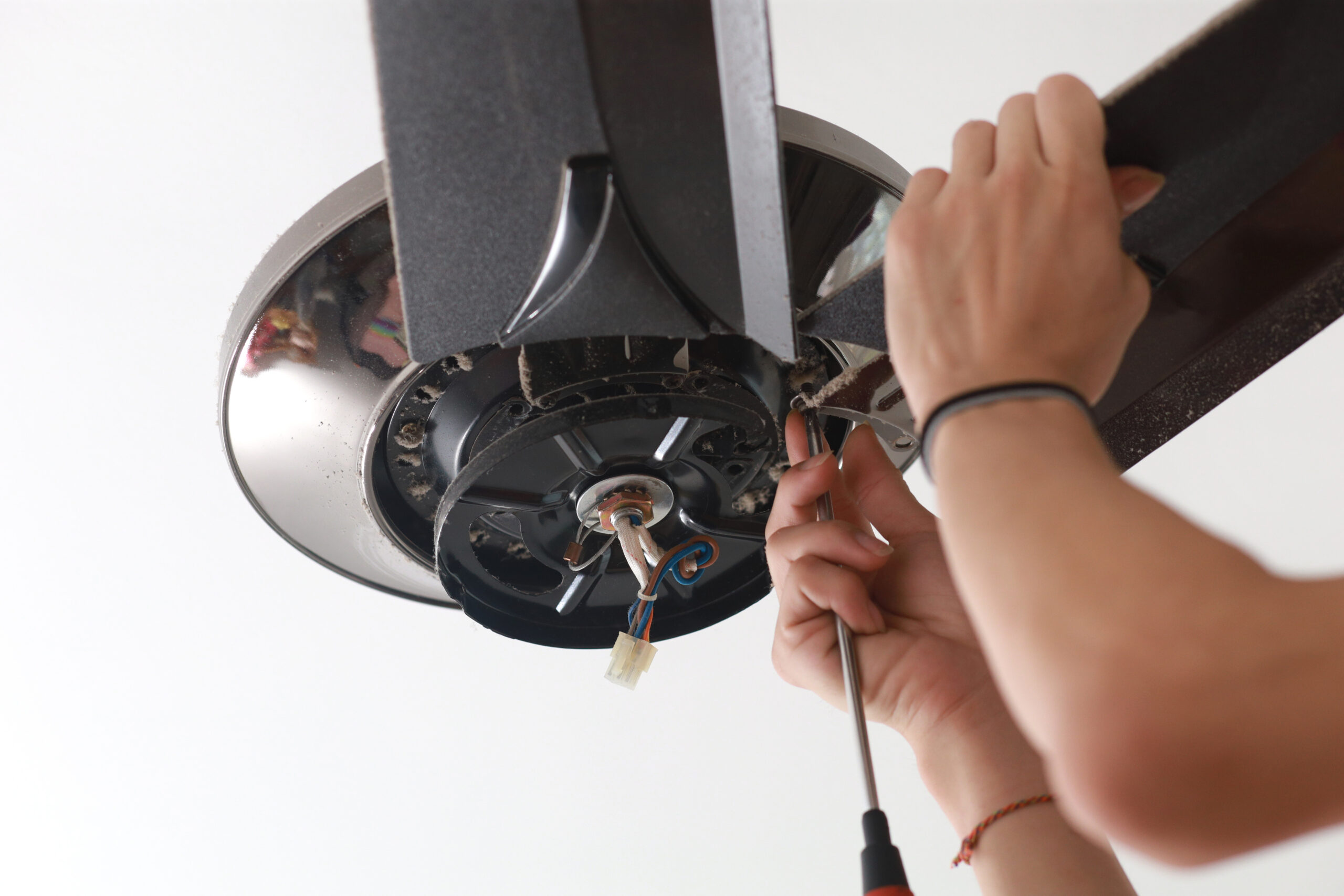
You walk into a room and notice water dripping from your ceiling fan. It is an unsettling sight, and your first instinct might be to wonder whether it is a plumbing issue, a roofing problem, or something else entirely. Whatever the cause, a ceiling fan leaking water is not something to ignore. For Houston homeowners, acting quickly and methodically can protect your home, your electrical system, and your family from serious harm.
Your Safety Comes First
Before you investigate the source of the leak or start pulling out buckets, your immediate priority should be safety. Water and electricity are a dangerous combination, and a ceiling fan is an electrical fixture. Follow these steps right away:
Turn off the ceiling fan at the wall switch. Do not just use the remote or pull cord. Use the wall switch to cut power to the unit entirely.
- Switch off the circuit breaker. Go to your electrical panel and turn off the breaker that controls the room with the affected fan. This eliminates the risk of electric shock while the area is wet.
- Do not touch the fan or the wet ceiling until the power is completely off and you are certain there is no active electrical hazard.
- Place a bucket or towels beneath the fan to catch dripping water and prevent floor damage.
- Keep children and pets out of the room until the situation has been assessed and resolved.
These steps take only a few minutes, but they could prevent a house fire, a nasty electric shock, or a slip-and-fall injury. Once you have made the space safe, you can start thinking about what is actually causing the problem.
Common Causes of Water Leaking From a Ceiling Fan
Water does not originate from the fan itself. Ceiling fans do not produce moisture. What you are seeing is water that has found its way into the ceiling space above and is traveling down through the path of least resistance, which happens to be the fan housing or the hole where the fan is mounted. Here are the most common reasons this happens.
A Leaking Pipe Above the Ceiling
One of the most frequent culprits is a plumbing pipe running through the ceiling cavity above the fan. Pipes can develop pinhole leaks, loose joints, or cracks over time, especially in older homes throughout Houston’s established neighborhoods. The water accumulates in the ceiling space and eventually flows down through the fan opening. If the leak is slow and steady regardless of rain or weather, a plumbing issue is very likely the cause. Our team at Power Plumbing Services can quickly locate and repair the source of the leak before it leads to significant water damage or mold growth.
Condensation Buildup
In a humid climate like Houston’s, condensation can build up inside ceiling cavities, particularly through the long Gulf Coast cooling season. Cold air conditioning ducts running through a warm ceiling space will attract moisture from the surrounding air. That moisture can collect and drip, and, just like a pipe leak, it will find the easiest exit point, often around a light fitting or ceiling fan. If the dripping tends to occur on hot, humid days or when the air conditioning has been running heavily, condensation is a strong possibility.
A Roof Leak
If water only appears after heavy rain or during a storm, the roof is likely the issue. Houston sees its share of intense downpours and tropical weather, and damaged or missing shingles, cracked flashing around chimneys or vents, or blocked gutters can all allow rainwater to enter the roof space. From there, it travels down through the ceiling structure and exits through any available gap, including where your ceiling fan is mounted. Roof leaks do not always appear directly below the entry point since water can travel along beams and timbers before dripping down somewhere unexpected.
An Overflowing or Leaking Fixture Above
If there is a bathroom, laundry, or kitchen directly above the room with the ceiling fan, an overflowing bath, a leaking toilet seal, or a burst washing machine hose could be sending water straight into the ceiling below. These leaks can be sudden and large in volume. If you notice the water surge after someone has been using the bathroom or laundry upstairs, this is almost certainly the cause.
HVAC or Air Conditioning Unit Leaks
Air conditioning systems have drain pans and condensate lines that are designed to carry away moisture produced during the cooling process. If those drain lines become blocked or the drain pan cracks, water can overflow into the ceiling cavity. With Houston’s air conditioning systems running hard for much of the year, this is a common cause of ceiling leaks during the warmer months when those units are working hardest.
How to Assess the Situation
Once the power is off and the area is safe, take a moment to gather some information before calling for help. The more detail you can provide, the faster a professional can diagnose and fix the problem.
Check when the leak started. Did it begin during or after the rain? After someone used the bathroom upstairs? On a particularly humid day?
Note the color of the water. Clean water is more likely to be from a plumbing supply line. Dirty or discolored water could indicate it has passed through insulation, timber, or other materials, suggesting a roof leak or an older leak that has been building up for some time.
Look at the ceiling around the fan. Is there a water stain that has been forming for a while, or does the ceiling look freshly wet? A brown or yellowed stain suggests the leak has been happening longer than you realized.
Check for damp smells. A musty odor can suggest mold is already forming, which means the moisture has been present for at least a few days.
If applicable, look upstairs. If you have a floor above, check for any signs of water around the toilet base, under sinks, or near the washing machine.
Write down or photograph what you observe. This information will be genuinely useful when you speak to a plumber or tradesperson about the issue.
What You Should Not Do
When people discover a ceiling leak, they sometimes make the situation worse without realizing it. Here are the things to avoid:
- Do not poke or prod the ceiling to check how wet it is. A waterlogged ceiling can collapse suddenly and without warning, and it can be extremely heavy.
- Do not turn the power back on until the source of the leak has been identified and fixed, and a qualified electrician has confirmed it is safe to do so.
- Do not assume the problem has resolved itself. Even if the dripping stops, moisture remains in your ceiling cavity and needs to be addressed.
- Do not attempt to open up the ceiling yourself unless you have the relevant skills and knowledge. You may disturb electrical wiring, insulation, or asbestos materials in older homes.
Temporary Measures While You Wait for Help
There are a few practical things you can do to minimize damage while you wait for a professional to assess the situation. Place absorbent towels or a bucket directly beneath the fan and check them regularly. If the ceiling is visibly bulging or sagging, place a bucket underneath and carefully use a screwdriver to make a small hole at the lowest point of the bulge to allow water to drain in a controlled way rather than risk the ceiling collapsing. This is a temporary measure only and should be done with extreme caution.
Move any furniture, rugs, or belongings away from the affected area to protect them from water damage. If you have a dehumidifier available, running it in the room can help reduce moisture levels in the air while the ceiling dries out.
When to Call a Professional
In most cases involving a ceiling fan and water, you will need at least one, and possibly two or three, professionals to fully resolve the issue. Here is a general guide to who you need:
A licensed plumber, if you suspect a burst or leaking pipe, an overflowing fixture, or an HVAC condensate issue. Plumbing leaks need to be located and repaired before any other work can begin. The team at Power Plumbing Services has the tools and experience to trace hidden leaks and carry out repairs with minimal disruption to your home.
A roofing specialist if the leak appears to be coming from outside, particularly after rain. A roofer can inspect and repair damaged shingles, flashing, or guttering.
A licensed electrician should be called once the source of the water damage has been fixed and the ceiling has dried out. The electrician will need to inspect the ceiling fan, any damaged wiring, and confirm it is safe to restore power and use the fan again.
Do not have the electrician fix the fan until the water issue is resolved. Repairing the electrical side of things first, without addressing the source of the moisture, means the problem will almost certainly return.
Take Action Before the Damage Spreads
A ceiling fan dripping water is a warning sign that something more serious is happening inside your walls or roof space. The longer the moisture is left unaddressed, the greater the risk of structural damage, mold growth, ruined insulation, and costly repairs. When a plumbing leak is involved, every hour of delay increases the potential for damage that is far more expensive to fix than the original problem. Power Plumbing Services specializes in exactly these kinds of plumbing emergencies for Houston homeowners. Whether it is a hidden pipe leak, a burst fitting, or a condensate line overflow, the team has the experience and equipment to locate the source fast and carry out lasting repairs with minimal disruption to your home. Do not wait and hope the problem resolves itself. Contact Power Plumbing Services today, get the source identified, and work through the repairs in the right order. Acting promptly protects your home, your budget, and the people living in it.