
Picture this: a pipe bursts under your kitchen sink, water is spraying everywhere, and you have no idea where to turn it off. Every second counts, and not knowing where your water shutoff valve is located can turn a manageable situation into a costly disaster. For Houston homeowners, knowing where this valve lives in your home is one of the most practical pieces of knowledge you can have.
Why Knowing Your Shutoff Valve Location Matters
Your water shutoff valve is the single most important tool you have when a plumbing emergency strikes. Whether you are dealing with a burst pipe, a leaking appliance, or a plumbing repair, being able to shut off the water supply quickly can save your floors, walls, and personal belongings from serious water damage.
In Houston, where high humidity already creates challenges for homes, water damage can escalate fast. Mold can begin developing within 24 to 48 hours of exposure to moisture, so the faster you stop the water flow, the better your outcome will be. Gulf Coast storm season adds another layer of urgency, since heavy rain and pressure fluctuations during a tropical system can put extra strain on aging plumbing. Beyond emergencies, knowing your shutoff location is also useful for:
- Planned plumbing repairs or appliance installations
- Replacing a toilet, faucet, or water heater
- Winterizing your plumbing during Houston’s occasional cold snaps
- Turning off the water before leaving on an extended vacation
The Main Water Shutoff Valve vs. Individual Shutoff Valves
Before diving into where to look, it helps to understand that your home has more than one type of shutoff valve. There are two main categories to be aware of.
The main water shutoff valve controls the water supply for your entire home. When you close this valve, all water flow into the property stops. This is the one you want to find and remember in an emergency.
Then there are individual fixture shutoff valves, also called stop valves or isolation valves. These are smaller valves located near specific appliances and fixtures like toilets, sinks, washing machines, and dishwashers. They allow you to cut water to just one fixture without shutting off the entire home. Both types are worth knowing, but finding your main shutoff is the priority.
Where to Look for Your Main Water Shutoff Valve
The location of your main shutoff valve depends on your home’s age, construction type, and how the plumbing was originally installed. Houston is a city of contrasts in this regard, from older homes in established neighborhoods like the Heights and Montrose to newer construction in suburbs such as Katy, Cypress, and Sugar Land, so it is worth checking several areas. Here are the most common places to look.
Near the Water Meter
In many Houston homes, especially those in established neighborhoods, the water meter is located near the street or at the edge of your property in a small underground box. This box is sometimes called a meter box or meter vault, and it is usually set into the ground near the curb or sidewalk.
Inside or very close to this box, you will often find a shutoff valve on the homeowner’s side of the meter. Note that the City of Houston, through Houston Public Works, controls the valve on the meter’s street side, so you should only operate the valve on your property side. You may need a long-handled wrench or a meter key to access and turn this valve, so it is worth keeping one of these tools handy.
Along the Front Foundation or Perimeter Wall
In slab foundation homes, which are extremely common across the Houston area, the main shutoff valve is often located where the main water line enters the home. This is typically along the front of the house, near a hose bib, or along an exterior wall closest to the street. Houston’s expansive clay soil tends to shift with wet and dry cycles, which can stress these supply lines over time, so it pays to know exactly where yours comes in.
Look for a valve handle or a round wheel-shaped handle on a pipe coming up from the ground or through the wall. This pipe is usually made of copper or PVC and runs directly from outside into the home.
Inside the Garage
A large number of Houston homes have their main shutoff valve located inside the garage, typically on the wall closest to the street side of the house. It is often at eye level or slightly lower, mounted on the wall where the main supply line enters the structure.
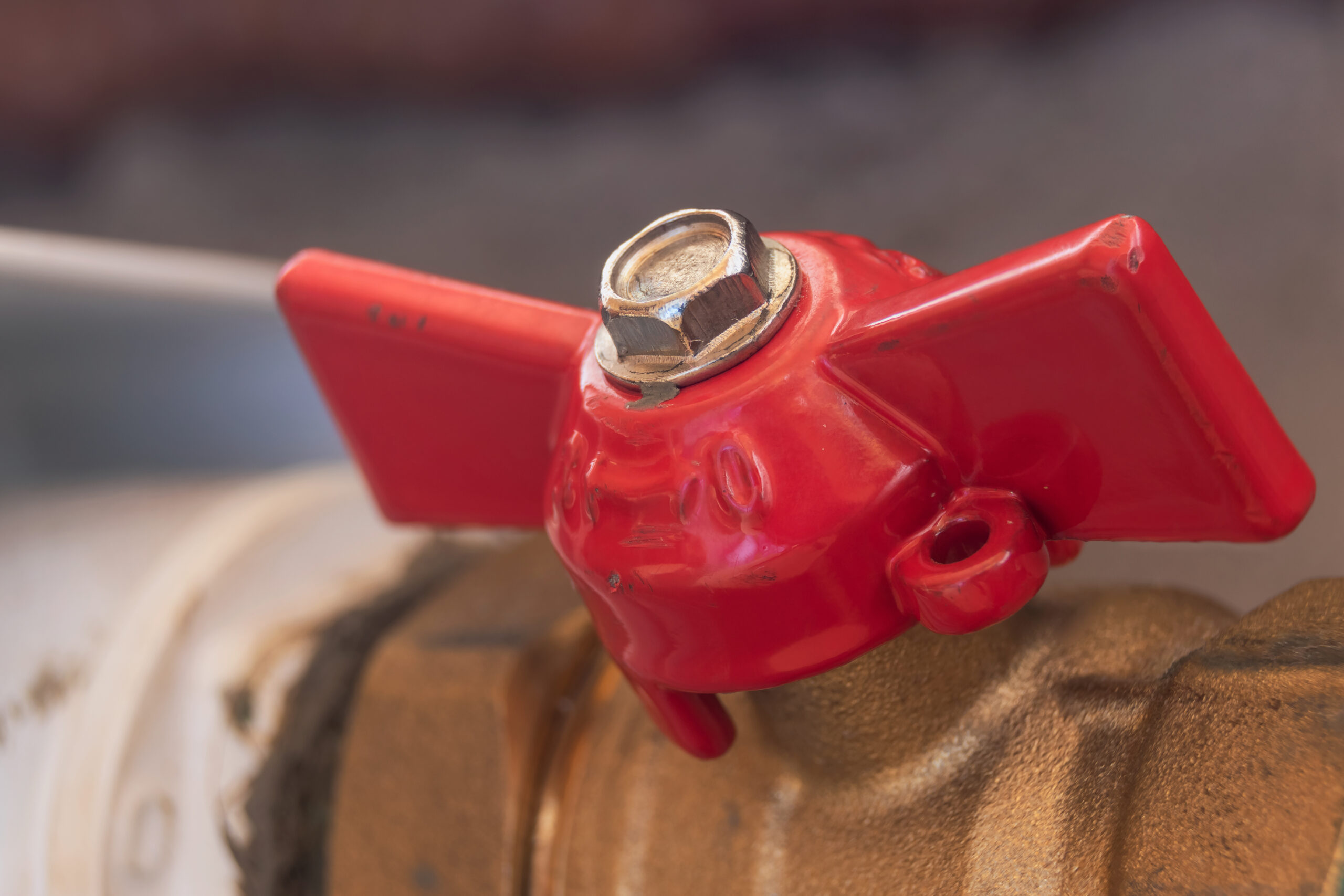
If you have a garage, this is one of the first places worth checking. The valve is usually a gate valve (with a round wheel handle) or a ball valve (with a lever handle that turns 90 degrees to open or close).
In a Utility Closet or Laundry Room
Some homes route the main water line through an interior utility space before it branches out to the rest of the house. Check any utility closets, laundry rooms, or mechanical rooms in your home. If you see a water heater or other plumbing equipment, the main shutoff may be nearby.
Under the Kitchen Sink
In older Houston homes or homes without a clear utility space, the main shutoff is occasionally found under the kitchen sink. While this is more commonly where you find individual fixture valves for the sink itself, it is worth a look if other locations have come up empty.
How to Identify the Right Valve
Once you are looking in the right area, confirm that you have found the correct valve. Here are some practical ways to identify your main water shutoff.
Follow the main pipe: Your shutoff valve will be on the main supply line coming into your home from the street. If you trace this pipe from the meter toward the house, it should lead you directly to the valve.
Look for a full flow valve: The main shutoff is typically larger than individual fixture valves. It is designed to handle the full water pressure and flow for the entire home.
Test it carefully: If you are unsure whether you have found the right valve, turn it off and then open a faucet inside the home. If all water flow stops, you have found your main shutoff.
Check for labeling: In some homes, especially newer builds, the valve may be labeled. It is also common to see it near a pressure-reducing valve, which looks like a bell-shaped device on the pipe.
Once you have found the valve, take a photo of its location on your phone so you always have a reference point. Better yet, write the location down and share it with everyone in your household.
Types of Main Shutoff Valves You Might Find
Not all shutoff valves look the same, and knowing what you are looking for makes the search a lot easier. The two most common types found in Houston homes are:
Gate valves: These have a round, wheel-shaped handle and require multiple turns to fully open or close. They are more common in older homes. Over time, gate valves can become difficult to turn or fail to seal completely when closed, which is something a plumber should evaluate if your home has older plumbing.
Ball valves: These have a flat lever handle and operate with a simple quarter turn. When the handle is parallel to the pipe, water flows freely. When the valve is perpendicular to the pipe, it is closed. Ball valves are considered more reliable and are standard in newer construction.
If you find that your main shutoff valve is a very old gate valve and it sticks or does not fully close, it is a smart move to have it replaced before an emergency forces the issue.
Do Not Forget Your Individual Fixture Shutoff Valves
While the main shutoff is the one to know in a full emergency, individual fixture valves are incredibly useful for smaller jobs. Here is a quick guide to where you will typically find them in your Houston home.
Toilets: Look for a small oval or round valve on the wall or floor behind and below the toilet tank.
Kitchen and bathroom sinks: Check inside the cabinet under the sink. There are usually two valves, one for hot water and one for cold.
Washing machine: Look for two valves (hot and cold) on the wall directly behind the machine.
Water heater: There is usually a cold-water supply valve on the pipe that feeds into the top of the unit.
Refrigerator with ice maker: A small valve is typically located behind the refrigerator or under the nearby sink.
It is a good habit to check that all of these valves turn freely. If any of them are stiff or corroded, that is a sign they may need to be serviced or replaced before you are in a situation where you need them fast.
What to Do Once You Find Your Shutoff Valve
Finding your shutoff valve is just the beginning. Once you have located it, there are a few things to do to ensure you are fully prepared.
First, test the valve by turning it off and confirming that water stops flowing throughout the home. Then turn it back on fully. This also helps prevent the valve from seizing up over time from disuse. Second, make sure the area around the valve is accessible. Do not stack boxes or heavy items in front of it. If it is outside in a meter box, make sure the box cover is in good shape and easy to open. Third, let every adult member of your household know where the valve is and how to operate it. In an emergency, you may not be the one who is home.
Take Control of Your Home Before an Emergency Finds You
Water damage is one of the most expensive and stressful problems a homeowner can face, and in many cases, it comes down to those first few minutes after something goes wrong. When you know where your shutoff valve is and how to use it, you take back control in the moments that matter most. If you are not sure your valves are in good working order, or if you have found an old gate valve that needs upgrading, the team at Power Plumbing Services is ready to help Houston homeowners get their plumbing in good working order. Do not wait for a leak to become a flood. Reach out today and get the peace of mind that comes with knowing your home is protected.