
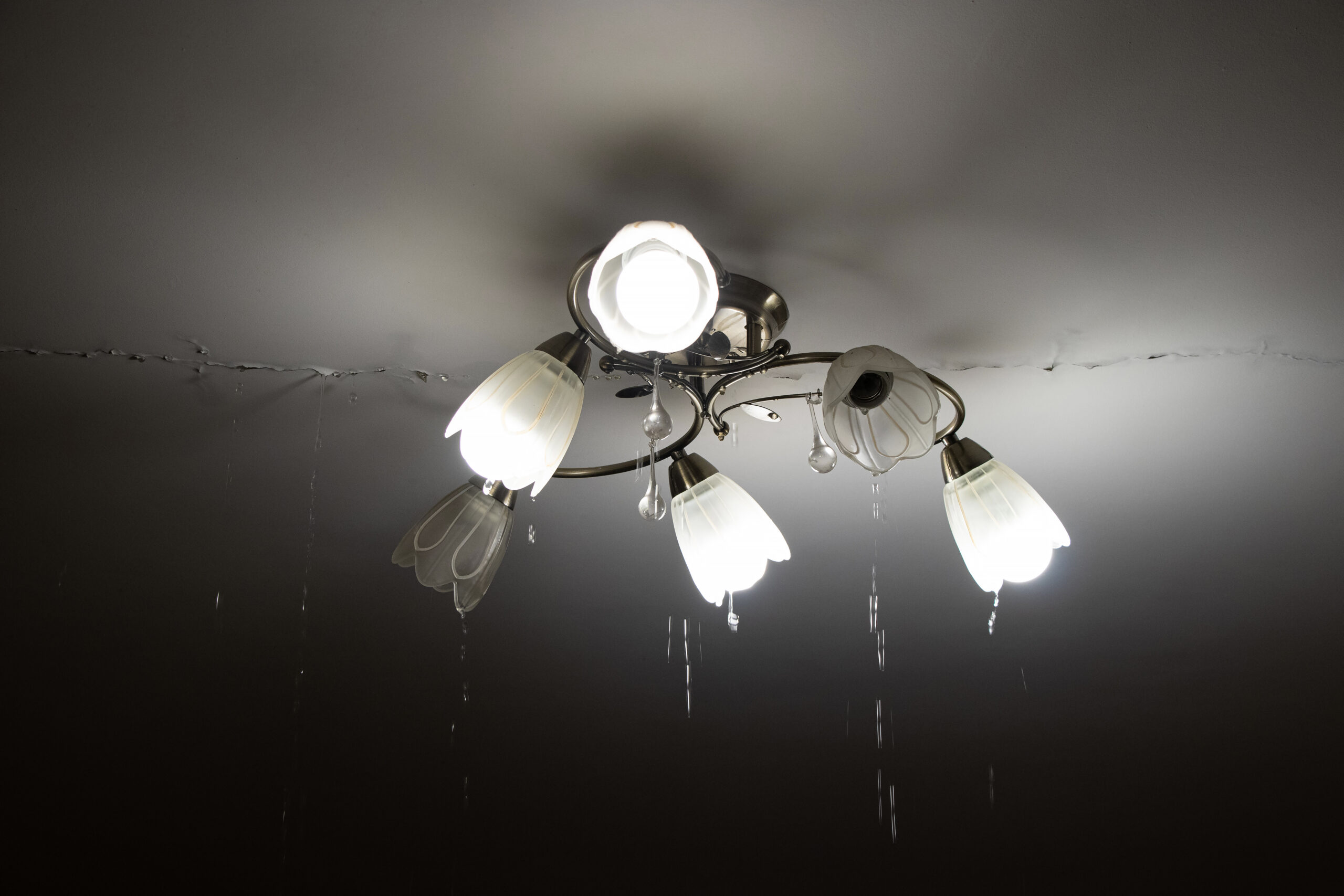
Water leaking from a light fixture is one of the most dangerous plumbing emergencies a homeowner faces. The situation combines two separate hazards inside a single ceiling cavity: active water damage and live electrical wiring. Every second the power stays on, the risk of electrical shock, short circuit, and fire increases. Gulf Coast storms, year-round air conditioning, and aging plumbing systems all stress residential structures in the Houston area, making this emergency more common than most homeowners expect.
This guide covers the six immediate steps to take, the seven causes that drive water through light fixtures, the specific danger of heavy rain and shower-related leaks, and exactly when to call a licensed Houston plumber.
Key Takeaways
- Water leaking from a light fixture is an immediate emergency. Cut power at the circuit breaker before touching anything near the fixture.
- Seven causes drive water through ceiling light fixtures: plumbing pipe leaks, upstairs bathroom overflow, roof damage, HVAC condensate backup, clogged gutters, ice dams, and structural cracks.
- Water leaking from light fixtures after heavy rain signals roof damage, cracked flashing, or clogged gutters that require a licensed roofer and plumber to diagnose.
- Water contact with electrical wiring causes short circuits that start fires inside sealed ceiling cavities, even after the dripping stops.
- Call a licensed plumber first to stop the water source, then a licensed electrician to inspect wiring before restoring power.
- Power Plumbing Services dispatches licensed plumbers across Houston to diagnose and stop ceiling leaks before they escalate to structural or electrical damage.
Is Water Leaking from a Light Fixture an Emergency?
Yes, water leaking through a light fixture is an immediate emergency. Cut power at the circuit breaker immediately, before touching any switch, fixture, or wet surface.
Water conducts electricity. When water contacts live wiring inside a ceiling fixture box, the current travels along the water path to any surface it reaches — including the fixture itself, the ceiling drywall, and the floor below. A slow drip exposes insulation, wire nuts, and wiring connectors to sustained moisture. Corroded connections inside a sealed ceiling cavity create ongoing short-circuit and fire risk even after the visible dripping stops.
Houston homeowners sometimes wait to see whether the leak worsens before acting. That delay turns a repair into a restoration. The correct response is immediate: power off, water contained, licensed plumber called.
What to Do When Water Is Leaking from Your Light Fixture (6 Steps)
Follow these steps in order. Do not skip to step four before completing steps one and two.
- Cut power at the circuit breaker. Go directly to the breaker panel and switch off the breaker for the affected room or section. Do not turn off the light switch. The switch interrupts the circuit but leaves the wiring inside the fixture box live. If you cannot identify the correct breaker, switch off the main breaker.
- Shut off the main water supply. Locate the main shut-off valve, typically near the water meter or where the supply line enters the foundation, and close it clockwise until it stops. This halts plumbing leaks immediately. Roof-related or HVAC condensate leaks will not stop at the valve, which helps narrow the source.
- Contain the water below the fixture. Place a bucket directly under the drip. Lay towels around the perimeter to protect flooring and prevent water from spreading to adjacent electrical outlets or baseboards.
- Document the damage before cleanup. Photograph the dripping fixture, the water staining on the ceiling, and any pooling on the floor. Record the date, time, and whether the dripping started during rain, after a shower, or without apparent cause. Insurance adjusters and plumbers use this information to trace the source and estimate damage scope.
- Stay out of the affected area. Wet ceilings loaded with water lose structural integrity. Drywall saturated with water weighs significantly more than dry drywall and detaches from ceiling joists when the paper facing degrades. Keep the room clear until a professional inspects the ceiling.
- Call a licensed plumber first, then a licensed electrician. The plumber stops the water source. The electrician inspects the fixture, wiring, and connections for corrosion, damage, and safety before power is restored. Restoring power before the electrician clears the fixture creates ongoing shock and fire risk.
Why Is Water Coming Through Your Light Fixture? (7 Causes)
The light fixture itself is not the source. Water enters the ceiling cavity from above and exits at the fixture opening because it is the lowest, weakest point in the ceiling assembly. Identifying the source determines which professional to call.
1. Plumbing Pipe Leak Above the Ceiling
Supply pipes and drain lines run between floors in most two-story homes. A pinhole leak in a copper supply pipe, a loose joint on a PVC drain line, or a cracked fitting drips into the ceiling cavity and pools above the fixture opening. The water that appears at the fixture often traveled several feet laterally along a joist before reaching the exit point.
Look for: water staining that extends beyond the fixture perimeter, discoloration along ceiling joists visible in the attic, or a continuous drip unrelated to weather or bathroom use.
2. Upstairs Bathroom Overflow or Drain Failure (After-Shower Leak)
Water leaking from a light fixture directly after a shower or bath use points to an upstairs bathroom plumbing failure. Four components fail most often: a deteriorated wax ring at the toilet base, a slow-draining tub or shower that overflows onto the subfloor, a failed caulk seal around the tub surround, or a corroded overflow drain gasket. Water pools on the bathroom subfloor, saturates the subfloor assembly, and reaches the ceiling cavity below through gaps around pipes and fixtures. If you want to understand more about common causes of slow-draining bathroom fixtures and how they contribute to overflow events, that context helps diagnose this type of leak accurately.
Look for: dripping that starts during or within 30 minutes of shower or bath use, water staining directly below a bathroom, or soft spots in the subfloor above the affected fixture.
3. Roof Damage After Heavy Rain
Roof damage is the leading cause of water leaking from light fixtures after heavy rain. Missing shingles, cracked flashing around chimney penetrations and vent pipes, clogged gutters that back water under the roofline, and deteriorated ridge caps all allow rainwater to enter the attic. Once inside, water travels along roof decking, attic insulation, and ceiling joists before pooling at the lowest exit point, which is typically a recessed light or ceiling fixture opening. For context on how plumbing systems interact with roof and ceiling water paths, the diagnostic process applies similar leak-tracing logic.
Houston’s Gulf Coast location exposes roofs to sustained wind-driven rain during tropical storm season, which forces water through compromised flashing and shingle seams that resist vertical rain. Leaks that appear only during storms, or that start during rain and stop shortly after, point to a roof or gutter failure rather than a plumbing source.
Look for: dripping that begins during or after rain events, attic insulation with visible wet staining, or daylight visible through the roof deck in the attic.
4. HVAC Condensate Drain Line Backup
Air conditioning systems remove humidity from indoor air and discharge that moisture through a condensate drain line, typically routed into a floor drain or exterior drip line. Houston homes run air conditioning for nine or more months per year, producing high condensate volumes. A clogged or disconnected condensate drain line causes the secondary drain pan to overflow into the ceiling cavity. Ceiling-mounted air handlers and attic units route this overflow directly above living spaces.
This cause is common in Houston specifically because of continuous AC operation and the high moisture volumes generated in a Gulf Coast climate. The drip pattern is typically slow, continuous, and independent of rain or bathroom use.
Look for: dripping unrelated to weather or water use, a musty odor near the fixture, or an air handler with a full secondary drain pan.
5. Clogged Gutters or Downspouts
Gutters blocked with leaves, debris, and granules from aging shingles overflow at the roofline during rain events. Overflowing water saturates the fascia board, penetrates behind the siding or trim at the roof–wall junction, and enters the ceiling cavity. This path appears in single-story homes more often than in two-story structures where the roof drainage is further from ceiling fixtures.
Look for: water staining near exterior walls rather than centered below a bathroom or pipe, overflow visible from gutters during rain, or sagging fascia boards.
6. Ice Dams (Less Common in Houston)
Ice dams form in colder climates when heat escaping through the roof deck melts snow, which refreezes at the cold eave and forces meltwater under shingles. While Houston rarely experiences freezing precipitation, an unusually severe winter storm similar to the February 2021 freeze event creates ice dam conditions on homes not insulated for sustained cold. The meltwater enters the ceiling cavity and exits at fixture openings.
7. Structural Cracks in the Ceiling Assembly
Settling foundations, wood frame movement from seasonal humidity changes, or physical damage to ceiling assemblies create gaps that allow water from above to track through. Houston’s expansive clay soils cause foundation movement that stresses the framing above, creating hairline cracks in ceiling drywall and gaps at structural joints where water enters when the ceiling cavity is wet from any other source.
Look for: existing ceiling cracks that widen, water staining along crack lines rather than concentrated at a fixture, or floor movement indicating foundation settlement.
What Happens When Water Leaks from a Light Fixture After Heavy Rain?
Water leaking from a light fixture after heavy rain signals roof or gutter failure that has allowed rainwater into the ceiling cavity. The water enters the attic through damaged shingles, cracked flashing, or open penetrations around vent pipes, travels along the roof decking and ceiling joist framing, and exits at the fixture opening because it is the weakest point in the ceiling assembly. Tropical storm season along the Gulf Coast, which runs from June through November, puts roofs under sustained wind-driven rain that forces water through compromised seams that resist normal vertical rainfall.
Saturated attic insulation batts act as a reservoir that continues releasing water long after the rain stops. Homeowners often notice the drip several hours after a storm passes, which creates confusion about the source. Ceiling fixture boxes create the weakest gap in the drywall assembly, and pooled water exits through that gap first.
The delay between rain and dripping misleads some homeowners into assuming a plumbing source. The diagnostic test: turn off the main water supply valve. If the dripping continues, the source is outside the plumbing system. If it stops, a pipe or drain failure is the cause.
A licensed roofer inspects flashing, shingles, and gutter connections to identify the entry point. A licensed plumber inspects the ceiling cavity for structural moisture damage and drain line condition. Power Plumbing Services dispatches licensed Houston plumbers to diagnose ceiling water intrusion sources and stop active plumbing contributors before structural damage compounds the repair scope.
For homeowners dealing with water damage after a storm, the plumbing problems to look out for after a tropical storm covers the full scope of storm-related plumbing failures beyond ceiling leaks.
Can Water Leaking Through a Light Fixture Cause a Fire?
Yes. Water conducts electricity. Contact between water and live wiring causes short circuits that melt wire insulation, arc against surrounding framing, and ignite insulation inside sealed ceiling cavities.
A fire hazard from a water-damaged light fixture develops in two phases. The first is the active drip phase, when water bridges the gap between live conductors inside the fixture box, causing a short circuit. The second, and more dangerous, is the post-drip phase, when the water dries but leaves corrosion on wire nuts, terminal contacts, and exposed copper conductors. Corroded connections generate resistance heat during normal use. That heat ignites surrounding insulation and wood framing inside the ceiling cavity, where no smoke detector detects it until the fire has already spread.
Standard household smoke detectors mounted on ceilings do not detect a fire that starts inside the ceiling assembly above them. The fire burns upward through insulation and framing before it penetrates the ceiling surface.
This is why a licensed electrician must inspect every fixture that has been in contact with water, including fixtures that dried out without visible damage. The electrician tests each connection, replaces corroded wire nuts, and verifies that the wiring insulation is intact before restoring power.
The Dangers of Ignoring a Water Leak at Your Light Fixture
A slow drip that appears manageable escalates through a predictable damage sequence when left unaddressed:
- Electrocution risk:
- Fire from corroded wiring: Water-corroded connections generate resistance heat under normal electrical load, igniting insulation inside the ceiling cavity where fire detection is delayed.
- Ceiling structural failure: Drywall saturated with water adds significant weight to the ceiling assembly. The paper facing that bonds drywall to framing degrades under sustained moisture, causing ceiling panels to detach and collapse.
- Mold growth: Houston’s average humidity of 75% accelerates mold colonization in wet ceiling cavities. Mold establishes in wet drywall within 24 to 48 hours and spreads through the framing and insulation above before becoming visible on the ceiling surface.
- Hidden structural rot: Wood framing members (joists, blocking, and top plates) that remain wet for more than 72 hours begin to soften and lose structural load capacity. Rot in ceiling joists compromises the floor system above.
- Insurance complications: Documented evidence that a known leak was not addressed reduces or eliminates insurance claim coverage for subsequent water damage and mold remediation.
If the ceiling staining extends beyond a single fixture, a professional water leak detection service in Houston locates the exact source before ceiling repair work begins, preventing repeat damage to the repaired surface.
Water Leaking from a Light Fixture in an Apartment: What Tenants Should Do
Tenants who discover water dripping from a ceiling light fixture carry immediate responsibility for their safety and a documentation obligation to their landlord.
- Cut the circuit breaker for the affected room immediately. Do not use the light switch.
- Notify the landlord or property manager in writing within the same hour via text message, email, or building maintenance portal. Written notification creates a timestamped record.
- Photograph and video the dripping fixture, the ceiling stain, and the area below before placing a bucket or towels.
- Do not attempt to remove, open, or inspect the fixture. Tenant electrical work violates lease agreements and creates personal liability.
- Contact renter’s insurance to report water damage to personal property. Renter’s insurance covers contents damage; the landlord’s policy covers structural repair.
Landlords who own properties in Houston are legally responsible for maintaining electrical systems and weatherproofing in habitable condition. A licensed plumber must diagnose the source before the electrician clears the fixture for use.
Who to Call When Water Is Leaking from a Light Fixture in Houston?
Two licensed professionals must work in sequence to resolve this emergency safely:
- Licensed plumber first to stop the water source. The plumber inspects the ceiling cavity, traces the leak path to the origin (pipe, drain, roof entry, or HVAC drain line), and repairs or isolates the source. No electrical work is safe until the water is stopped and the ceiling has dried sufficiently.
- Licensed electrician second to inspect the fixture, wiring, and connections. The electrician tests insulation integrity, replaces corroded wire nuts, and confirms the fixture is safe before power is restored. Do not restore power before this inspection.
Power Plumbing Services dispatches licensed Houston plumbers to diagnose ceiling leak sources, trace water paths through the ceiling cavity, repair burst or leaking pipes, and clear clogged condensate drain lines. Our licensed Master Plumber oversees all diagnostic and repair work. If your Houston home shows signs of a water leak behind walls or above ceilings, contact Power Plumbing Services to schedule a diagnostic inspection before the damage compounds.
For homes with aging galvanized steel or polybutylene supply lines that develop pinhole leaks in ceiling assemblies,
whole-home repiping in Houston stops recurring ceiling water damage at the source by replacing the supply line system entirely.
Frequently Asked Questions
Is water leaking from a light fixture an emergency?
Yes. Water leaking from a light fixture is an electrical emergency. Water in contact with live wiring creates immediate risk of shock, short circuit, and fire. Cut power at the circuit breaker before touching the fixture, the light switch, or any wet surface in the area.
Can water leaking through a light fixture cause a fire?
Yes. Water conducts electricity and causes short circuits when it contacts live conductors inside the fixture box. The short circuit generates heat that melts wire insulation and ignites surrounding wood framing and insulation inside the ceiling cavity. A secondary fire risk develops after the water dries because corroded wire connections continue to generate resistance heat under normal electrical load.
What should I do if water is coming through my light fixture?
Cut power at the circuit breaker immediately. Shut off the main water supply. Place a bucket under the drip and photograph the damage. Stay out of the room. Call a licensed plumber to stop the water source, then a licensed electrician to inspect the wiring before restoring power.
Can I ignore a small ceiling water leak near a light fixture?
No. A slow drip near a light fixture keeps wiring in sustained contact with moisture. Corroded connections build resistance heat over time and create fire risk inside the ceiling cavity. Wet drywall begins to lose structural integrity within hours and develops mold within 24 to 48 hours in Houston’s humidity. Small leaks that are ignored become ceiling collapses, mold remediations, and electrical rewiring projects.
What causes water to drip from a ceiling light after heavy rain?
Rain-related ceiling leaks at light fixtures point to roof damage, failed flashing, or clogged gutters that allow rainwater into the attic. The water travels along roof decking and ceiling joists and exits at the fixture opening. A licensed roofer identifies the roof entry point. A licensed plumber inspects the ceiling cavity for plumbing contributions and moisture damage scope.
Why is water coming through my light fixture after a shower?
Water appearing at a ceiling light fixture after shower use points to an upstairs bathroom plumbing failure. The four most common causes are a deteriorated wax ring at the toilet base, a slow-draining tub that overflows onto the subfloor, a failed caulk seal around the tub surround, and a corroded overflow drain gasket. A licensed plumber inspects the subfloor assembly and repairs the failed component.